How it sounds
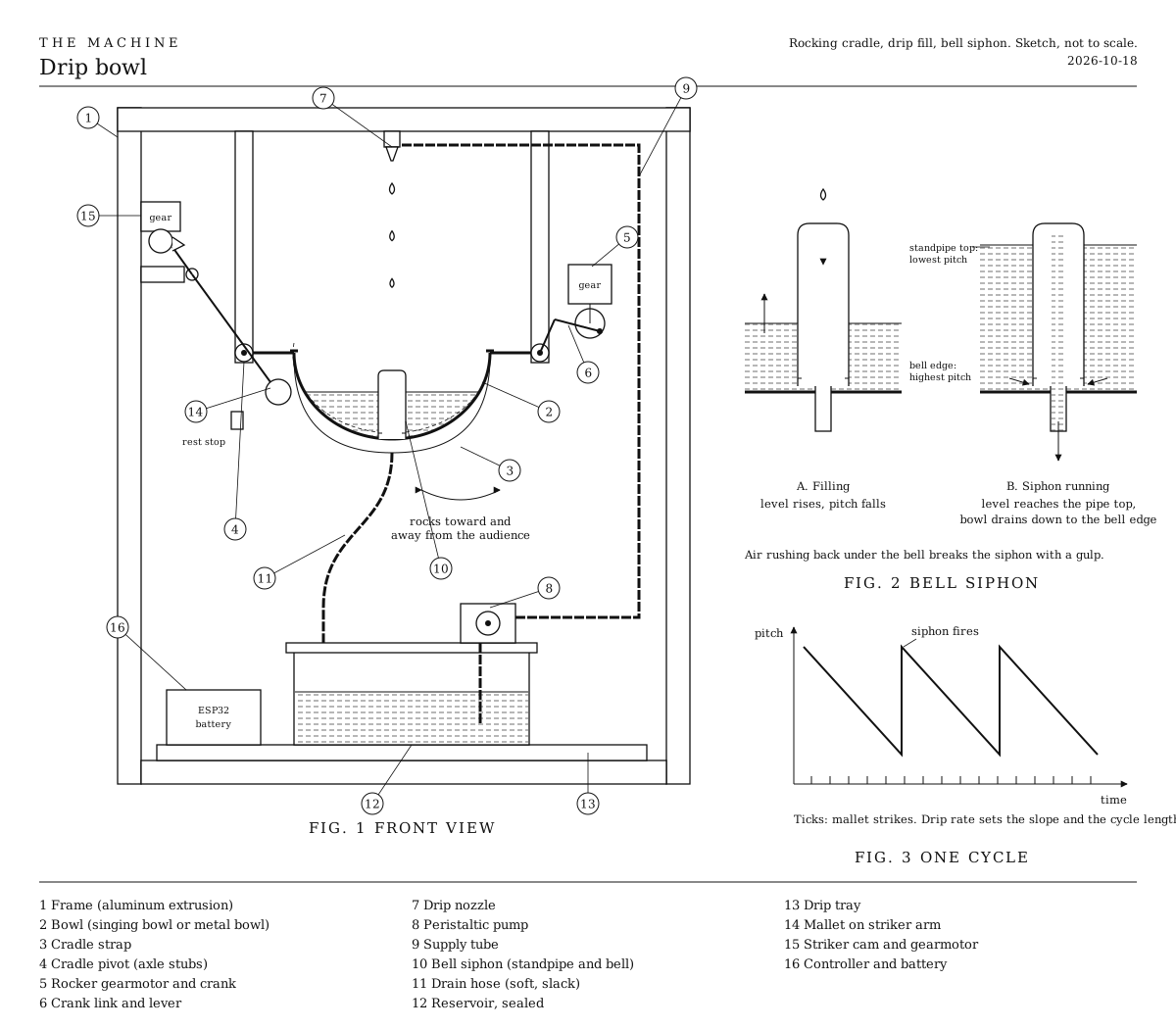
A metal bowl (singing bowl or plain metal bowl) holding a little water, rocking slowly in a cradle and struck by a mallet. The sloshing water bends the pitch while the bowl rings, which is the warble heard when a bowl with water in it is struck.
- Level sets pitch. More water, lower pitch.
- Slosh makes the warble. The water moves while the bowl rings, so each strike lands on a different slosh.
- Drops plink. Each drop hitting the surface makes its own small sound.
How it works
- Drip fill. A peristaltic pump drips water from a sealed reservoir into the bowl. The pitch slides down as the bowl fills. Drip rate is the control: it sets how fast the pitch falls and how long a cycle takes.
- Rocking cradle. The bowl hangs in a strap cradle on two axle stubs at rim height, so it swings like a pendulum, toward and away from the audience. A gearmotor and crank rock it continuously.
- Mallet. A striker arm on a cam lifts and drops the mallet against the side of the bowl, like a trip hammer. A rest stop keeps the mallet just clear, so it rebounds instead of resting on the bowl and choking the note.
- Bell siphon reset. A standpipe through the center of the bowl’s bottom with a cap (the bell) over it. When the water reaches the top of the standpipe, the siphon starts and drains the bowl down to the bell’s bottom edge, then air rushing in breaks it with a gulp. No electronics. The standpipe height sets the lowest pitch; the bell’s edge sets the highest. The drain returns to the reservoir through a soft hose.
One cycle: the pitch falls slowly as it fills, snaps back up when the siphon fires, and starts again. The siphon gulp and the pump are part of the sound.
The bottom center of a bowl moves little when it rings (it’s where a singing bowl rests on a palm), so the standpipe hole goes there.
Concerns
- Water near the battery and electronics.
- Spills when technicians carry it: a sealed loop and a drip tray.
- Evaporation in long installations.
- The drain hose must stay soft and slack so it doesn’t damp the bowl or fight the rocking.
Other water and bowl ideas
From the same session, not drawn.
- Tipping bowl. Like a tipping-bucket rain gauge: the bowl fills until it tips, dumps, and swings back against a stop that strikes it.
- Dipping (water gong). A winch lowers a ringing bowl into a tub, bending its pitch down.
- Pump-controlled pitch. A reversible peristaltic pump fills and drains the bowl to a commanded level, so pitch can be tuned and locked to the ensemble.
References
- Trip hammer. A rotating cam lifts a hammer and drops it. The mallet here works the same way.