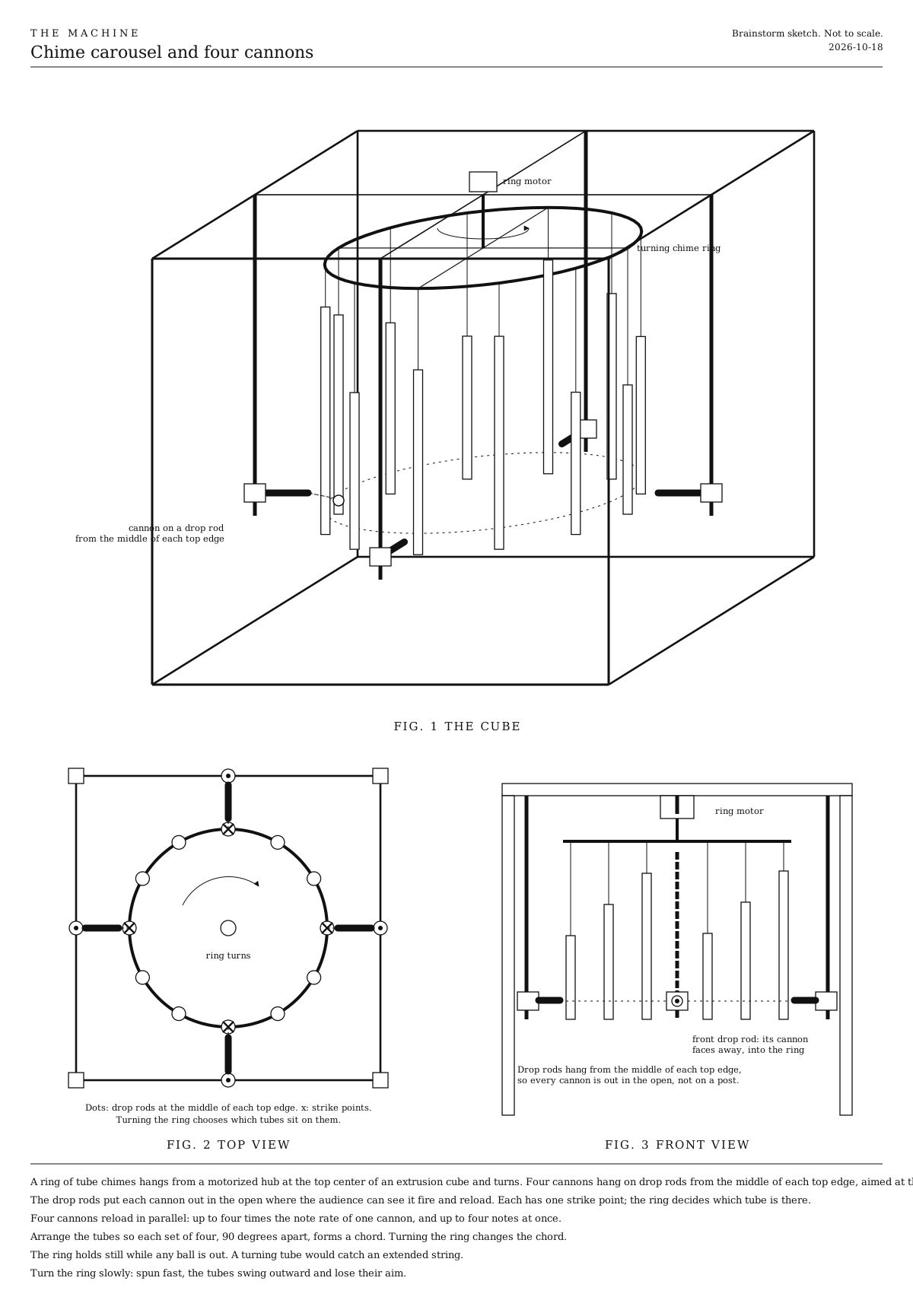
A separate instrument from the single ball cannon, using the same cannon mechanism. A ring of tube chimes hangs from a motorized hub at the top center of an aluminum extrusion cube and turns.
Fig. 1Chime carousel and four cannons.A turning ring of tube chimes inside an aluminum extrusion cube, with a cannon on a drop rod from the middle of each top edge.
How it works
A ring of tube chimes hangs from a motorized hub at the top center of an aluminum extrusion cube and turns. Four fixed cannons hang on extrusion drop rods from the middle of each top edge, aimed at the center.
The drop rods put every cannon out in the open, not tucked against a corner post, so the audience can see each one fire and reload. The front cannon hangs between the audience and the ring, facing into it.
Each cannon has one strike point; the turning ring decides which tube sits there. The cannons need no turret, just an aim set once.
Notes and chords
Four cannons reload in parallel: up to four times the note rate of one cannon, and up to four notes at once.
Arrange the tubes so each set of four, 90 degrees apart, forms a chord. Turning the ring changes the chord.
Hang the tubes with their bottoms level and fire just above the bottoms, as in the ring version of the ball cannon.
Turning the ring
The ring holds still while any ball is out: a turning tube would catch an extended string.
Turn the ring slowly; spun fast, the tubes swing outward and lose their aim.