How it works
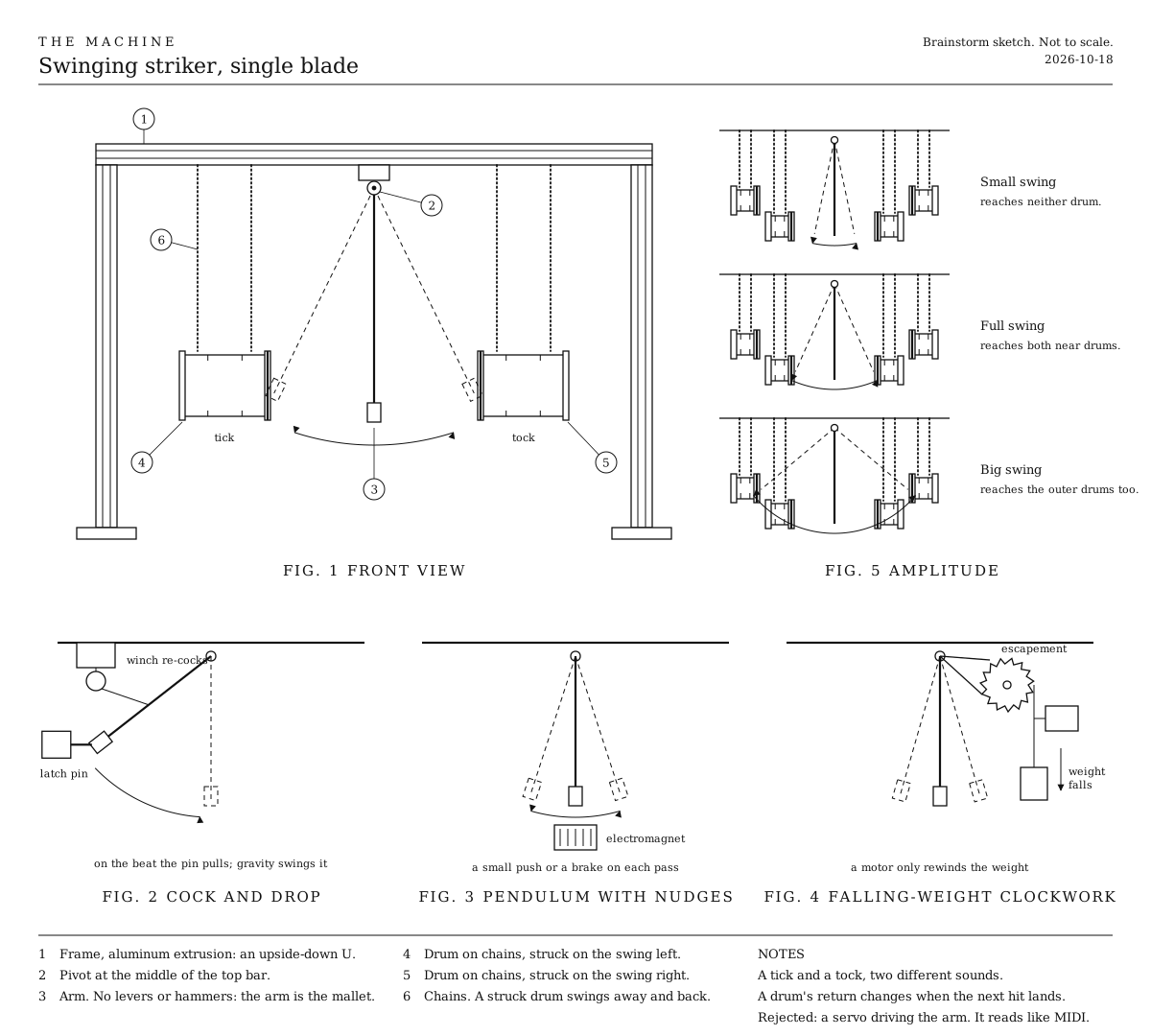
- An aluminum extrusion frame shaped like an upside-down U. A single arm hangs from the middle of the top bar and swings side to side.
- Drums hang from the top bar on chains, one on each side of the arm. The arm strikes one drum on each swing direction: a tick and a tock with two different sounds.
- No levers or hammers: the arm is the mallet.
- Because the drums hang, each one swings away when struck and comes back. Its return changes when the next hit lands, so two pendulums interacting write part of the rhythm.
- Close cousin of the Metronome; the Metronome could be this mechanism in disguise.
Drive options
No servo positions the arm.
- Cock and drop. A latch holds the arm raised to one side; on the beat, the system pulls a pin and gravity swings it. A slow, visible motorized winch or crank re-cocks it automatically.
- Pendulum with nudges. The arm swings freely; an electromagnet near the bottom adds a small push or a brake each pass, like an electric pendulum clock. It can’t snap to a beat, so it converges, which suits the focus lock for motion instruments.
- Falling-weight clockwork. A weight on a cord powers the swing through an escapement; a motor only rewinds the weight.
Amplitude
- Amplitude is a musical control: a small swing may reach neither drum, a full swing reaches both. Extra drums hung further out are reached only by big swings.
Rejected
- A servo driving the arm directly. It works mechanically but moves point to point with no momentum, which reads like MIDI.
References
- Metronome synchronization demo. Several metronomes on a loose shared platform drift, then pull each other into sync. Physical version of the focus lock; the Machine composes the moment instead of waiting for it.
- Electric pendulum clocks and escapements. A pendulum kept swinging by small timed pushes, or powered by a falling weight. Model for “direction decides when; physics does the playing.”